
Heartland Boston Concrete CompanyHeartland Boston Concrete CompanyRequest an estimate(857) 770-0722

Concrete floor installation in Boston MA - a slab that protects your flooring

Old floor cracked, damp or uneven? We pour a new concrete floor on solid, packed ground with the moisture sheet kept whole.

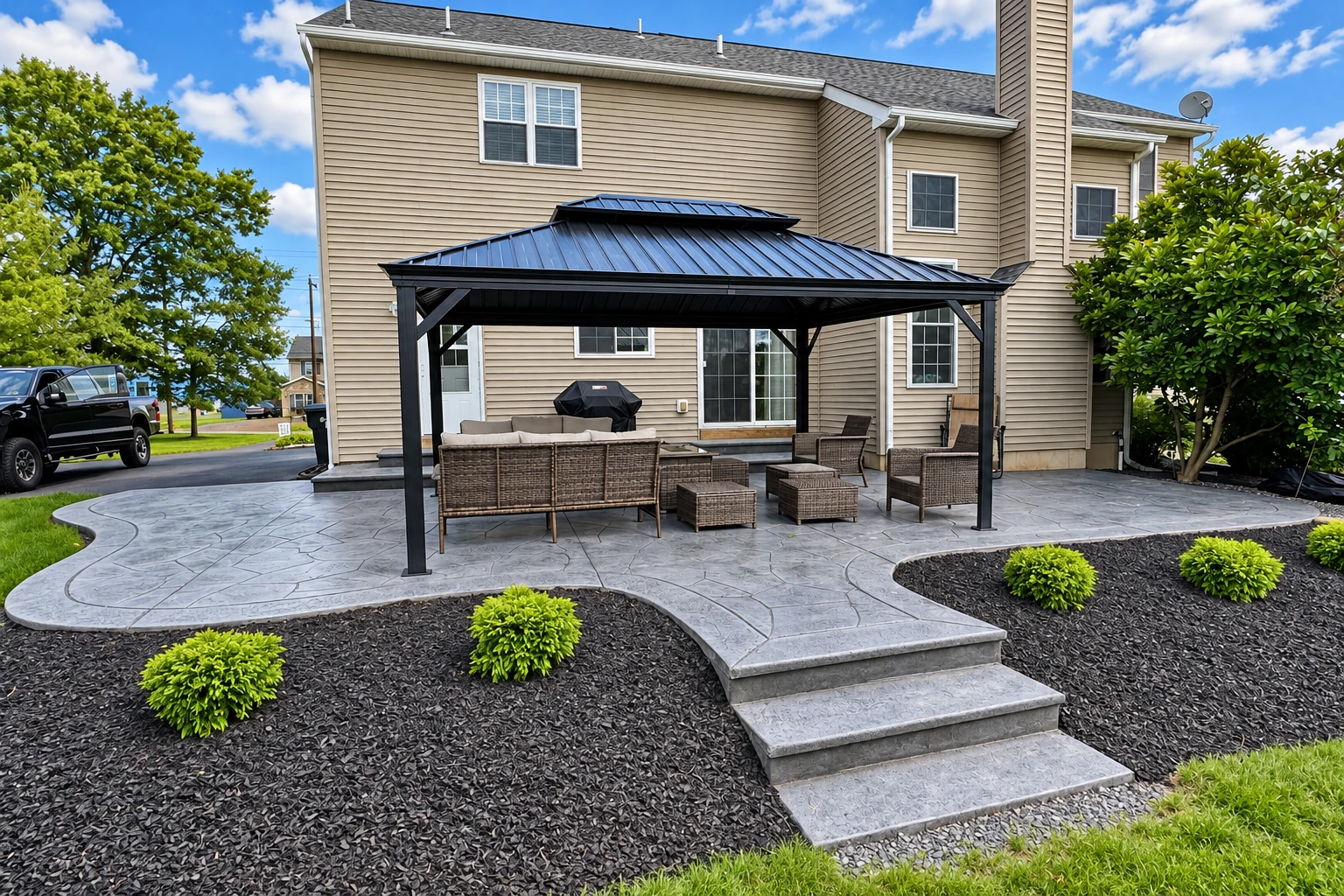
Stamped concrete patio with a covered seating area leads to broad concrete steps in a landscaped backyard.

What does it take to put in a new concrete floor in Boston?

Concrete floor installation in Boston means we make the ground under the room solid, lay a moisture sheet right under the slab and pour a new concrete floor that protects the flooring you put on top. Most of these jobs are a basement floor replacement or a slab for a new room or addition.

Most calls start with a basement floor that's cracked, uneven or damp enough to spoil whatever sits on it, or with a new room that needs a slab before anything else can happen. The price moves with the size of the floor, how much old concrete has to come out, how easy it is to get material inside and how much work the ground needs before we pour. The schedule turns on that prep, the permit and the weather, since a cold-day pour needs extra protection, and we check the permit side with the city before anyone starts digging. When I come out, I'll walk the room and give you a figure for your own floor.

How we handle concrete floor installation

We start by breaking out and hauling away any old floor, then dig down to firm ground and pack the subgrade, the soil and stone the slab sits on, because a floor only stays flat if what's under it doesn't move. We look at where water goes around the room before we pour. Next comes the vapor retarder, a plastic sheet that holds back moisture from the ground, laid right under the concrete, and we keep it whole through the pour since what's under the slab matters for the flooring on top. Rebar or wire goes in so the slab holds together if it cracks, then we pour, trowel the top smooth and cut control joints, shallow lines that give the concrete a planned place to crack as it shrinks. After that it cures, the slow hardening when concrete gains its strength, so we leave it alone until it's ready. If the budget gets tight, the base is the last place I'll cut, because nobody sees it on day one but it decides whether the floor settles.

A new floor is often part of a bigger job. If the stairs down to the basement or out the back door are crumbling, we can pour concrete steps while we're there, and outside we build concrete pool decks with a broom finish, a lightly brushed texture that gives wet feet some grip.

Replacing a cracked or damp basement floor

This suits older houses where the floor has heaved, sunk or stays damp enough to ruin carpet or anything stored on it. We break out the old slab, fix the ground under it and pour new, so you're not putting fresh flooring over the same problem.

A new slab for an addition or finished room

This suits a space where nothing's been poured yet, or a room getting real flooring for the first time. We plan the slab around what goes on top, whether that's tile, wood, vinyl or a sealed concrete finish, since that decides how smooth the top has to be.

Why Boston homeowners call Heartland Boston Concrete Company for concrete floors

I give the estimate and run the job

I come out to see your floor and give the estimate myself, and our own crew does the work with me running it. The person who explains the plan is the same one making sure it happens. Call (857) 770-0722 to set a time.

In business since 2017, prep first

We've been in business since 2017, 9 years now. I learned beside older finishers who cared more about the prep than the finish, and that's still how we work, because the ground under a floor decides how it holds up long after the top looks good.

Licensed and insured, and clear on state rules

We're licensed and insured. In Massachusetts, most work on an existing 1- to 4-family owner-occupied home has to be overseen by a licensed construction supervisor or a registered design professional, and the contractor must also be a registered Home Improvement Contractor, which is a separate registration. Ask about both.

Get a free on-site estimate for your concrete floor

Tell us which room it is, roughly how big the floor is, how many units your building has and whether you live there, and we'll reply within one business day. I'll come out, look at the room and the ground, and give you a free estimate on site. There's no obligation to book.

Location
Boston, MA 02118
Hours
Mon–Fri: 6 AM–11 PM, Sat–Sun: 7 AM–11 PM

Concrete floor installation inside Boston city limits

In Boston, Inspectional Services issues the permits, a Long-Form permit for major work that changes a home's structure or use and a Short-Form permit for minor work that doesn't. Which one a new floor falls under comes down to the job, so before work starts we check with the city about the permits yours may need and help you get the paperwork in order. Work waits until the permit is issued, because the city can charge double the permit cost or write a building code violation if it doesn't.

Two more city rules can change the plan. Residential buildings in Boston's Flood Hazard District may not have basements with floors below grade on all sides, so if your home is in that district, tell me early when we're talking about a basement floor. Homeowners can only do this work themselves in a 1 or 2 family home they live in, and the owner of a unit in a building with 3 or more homes has to hire a licensed contractor. We're based in Boston and work across the cities around it, including Cambridge and Brookline, where we see the same older houses with narrow basement stairs and tired floors.

Questions Boston owners ask about concrete floors

How much does a concrete floor cost in Boston?

A concrete slab in Boston usually costs about $4.50 to $8.50 per square foot. That's what the work tends to run around the city, not our quote, and where your floor lands depends on what I find in the room and the ground under it. Call (857) 770-0722 and I'll come take a look.

What causes cracks in a new concrete floor?

Concrete shrinks as it hardens, so a concrete industry guide says some random cracking should always be expected in a floor, even when the joints are spaced close enough. That's why I tell owners up front that a few fine cracks are normal in new concrete, so you can pick a flooring or finish with that in mind.

What is the best way to pour a concrete floor in winter in Boston?

Concrete can go in during winter, but once the air drops to 40°F or below, or is expected to, while the new concrete still needs protecting, the pour needs a plan to keep it warm. A Michigan concrete association's guide advises covering fresh concrete right away with insulated blankets, straw or heated enclosures to hold it at 50°F or above for at least 3 days. We work out that plan with you when we set the pour date.

How do I keep moisture from coming up through a new concrete floor?

Lay a vapor retarder directly under the slab, which a concrete industry guide says gives the most protection for floor coverings, coatings and the room itself. A vapor retarder maker adds that even small holes in that sheet can greatly raise the moisture coming through and lead to flooring failures, so it's fair to ask any crew how they keep it whole.

How is a concrete floor job planned in Boston?

It starts with what's going on top of the floor and the rules for your building, then the ground under the room, then the pour date. I'll ask how many units your building has and whether you live there, since that decides who can do the work. The date gets set once the permit is in hand and the weather plan is clear.

Call (857) 770-0722