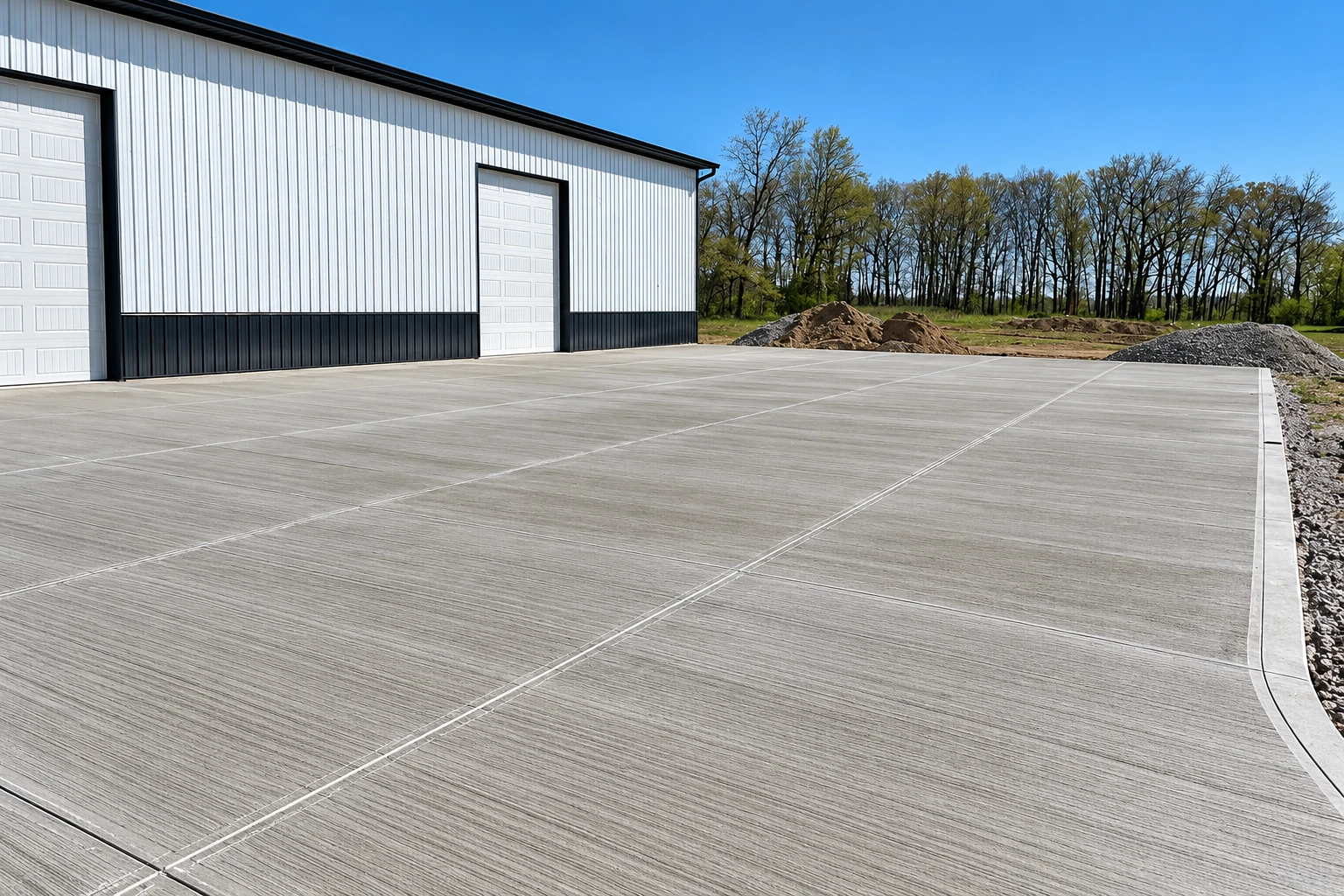
A lot takes a different kind of wear than a home driveway, with more cars, tighter turns and tires scrubbing the same spots day after day, so we plan for that from the first visit. We start by checking where the water runs, so the finished slab sheds it away from buildings instead of pooling or running back toward the house. Then we dig out the soft soil and pack a stone base in layers, because the subgrade, the ground the slab sits on, is what keeps a lot flat once winter gets into it. We set the forms and any steel the job calls for, plan the pour for a stretch when it won't freeze right away, and give the surface a broom finish, a light ridged texture so tires and feet grip when it's wet. Control joints, the shallow cuts that give the slab a straight place to crack instead of a random one, go in on time, the concrete stays protected while it cures and gains strength, and before we leave I go over first winter care with you. If the budget gets tight, I'd rather trim the finish than the base, because nobody sees the base on day one but it decides how the lot holds up for years.
Some lots come with connected work. A light pole, a fence line or a small shed at the edge of the lot needs concrete footings under it, and we pour those as part of the same plan. If digging along a building turns up a corner that has settled, we'd look at foundation raising before the new slab goes in against it, so the two end up at the same level.
New lot on yard or gravel
This suits owners adding parking where there's lawn, dirt or loose gravel now. It usually means the most digging and base work, since that ground was never packed to carry cars, and it's where a new entrance from the street most often comes into the plan.
Replacing a worn-out lot
This suits a lot of old asphalt or cracked concrete that has sunk, heaved or holds puddles. We break out the old surface and look at what's underneath, because a lot that failed usually failed from below, and the new one stands a better chance once that's fixed.