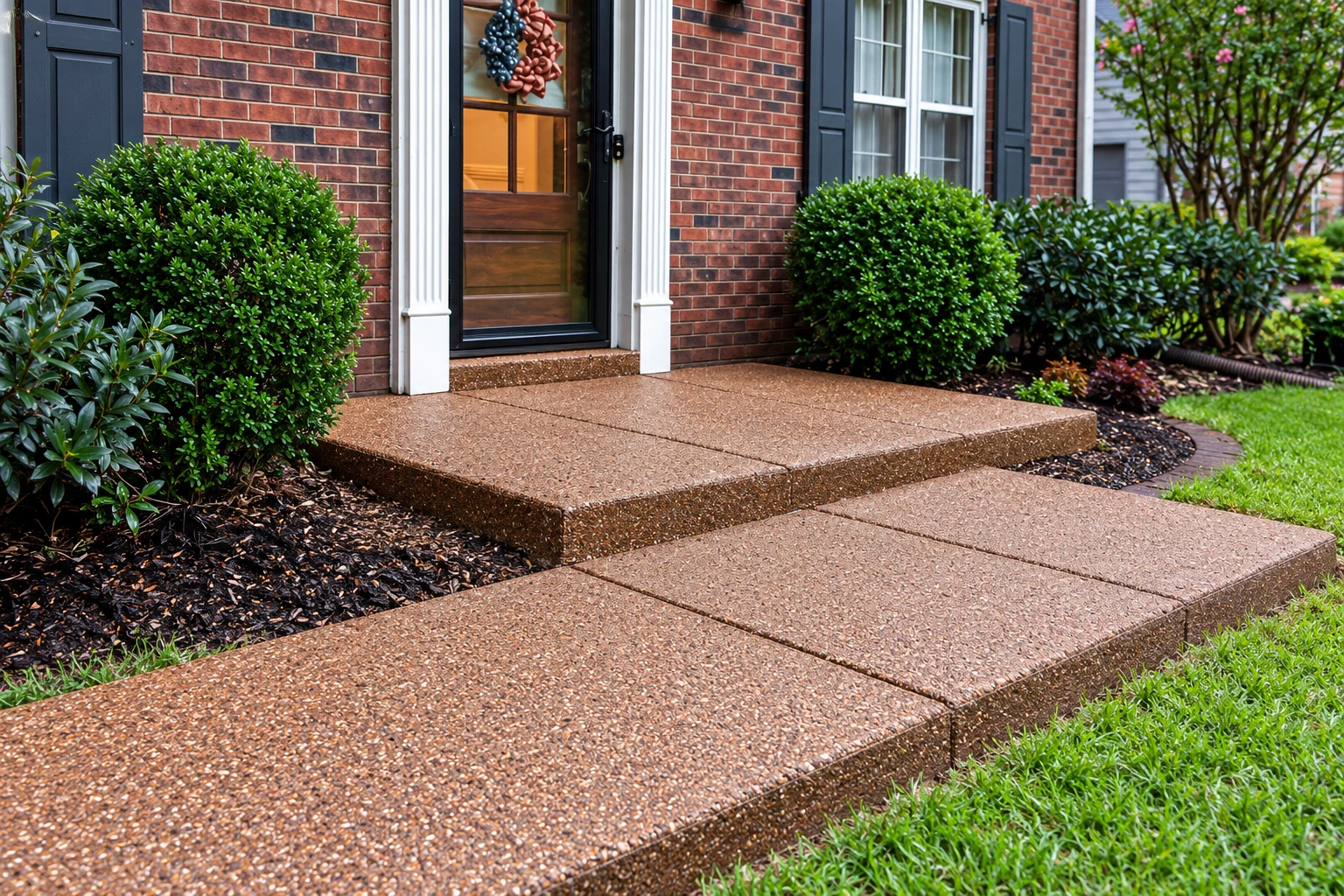
If your slab is still in good shape, I look at whether an overlay makes sense before anyone talks about tearing it out, because there's no reason to pay for demolition you don't need. When the old slab has sunk or cracked through, we take it out and start over with the subgrade, the dirt and stone the slab sits on, which we dig out and pack instead of raking level. That base is buried by the end of the first day and it's the first thing people want to cut, but I'd rather spend there and keep the pattern simpler, because a colored finish only looks good as long as the slab under it stays flat. We check where the water runs so the slab falls away from the house, pour in the cooler part of the day so the top doesn't turn out weak and dusty, and cut control joints, shallow grooves that tell the concrete where to crack, while it's still fresh so any cracks land where we chose. Then we let it cure, which is the wait while the concrete gains strength, and we go easy on the sealer, since a heavy coat can spoil the look you paid for.
Decorative work often sits next to other concrete. If your patio steps down a slope, we can build concrete retaining walls to match it, and a stained or polished floor inside a basement or addition starts with concrete floor installation done flat and level so the finish has something solid to sit on.
An overlay on the slab you have
This suits a patio, walk or floor that's still solid and isn't sinking, because the new layer only holds as well as the concrete under it. It saves the work of a tear-out, but it won't fix a slab that's cracked through or heaving.
A new decorative pour
This suits a slab that has sunk, broken up or sends water toward the house, since a nice finish on bad ground won't stay nice. We start from the base, and then you can add color through the mix, stamp a pattern or expose the stone in the surface.