Heartland Boston Concrete CompanyHeartland Boston Concrete CompanyRequest an estimate(857) 770-0722

Concrete sidewalk building in Boston MA - a walk built to handle winter

Cracked, heaved or sinking sidewalk slabs trip people up. We dig out, pack a firm base and pour a walk that sits flat.

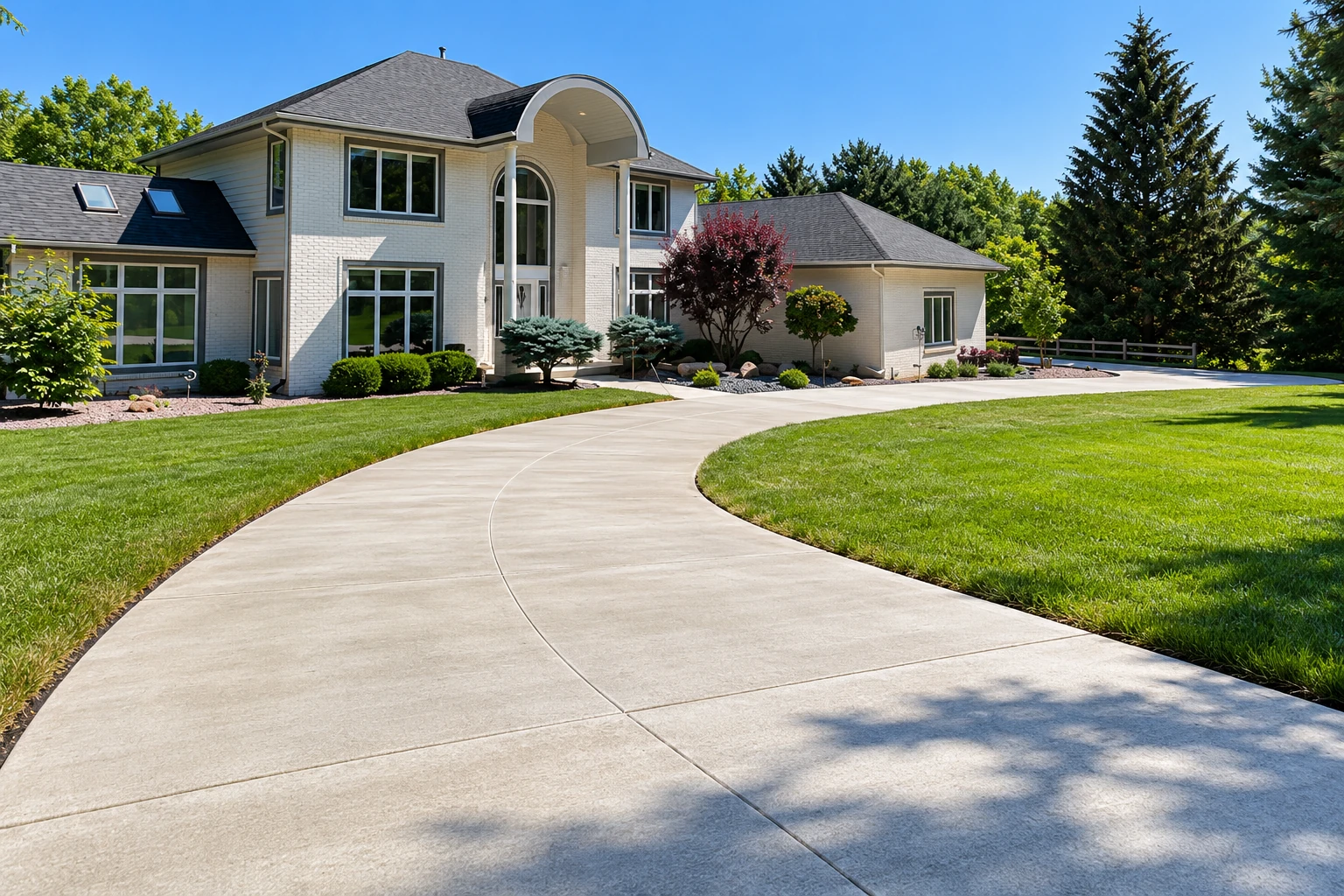
Curving concrete sidewalk crosses a lawn toward a large white house.

What goes into building a new concrete sidewalk in Boston?

Concrete sidewalk building in Boston means tearing out a cracked or sunken walk and pouring a new one on a base that's been dug out and packed, so the walk sits flat, sheds water and stays safe underfoot.

Most people call us when a slab has tipped up at one edge, sunk in the middle or started holding puddles, and nearly every time the trouble is under the concrete, not in it. At Heartland Boston Concrete Company, the price of a new walk mostly comes down to its length and width, how much old concrete and loose fill has to come out, and whether a car crosses it anywhere, since that stretch gets built heavier. The schedule turns on the weather, the city's paperwork and curing, the wait while the concrete hardens before it can take weight. The estimate gives you the figure for your own walk, and if the steps up to your door are in rough shape too, we can look at concrete steps on the same visit.

How we do concrete sidewalk building, start to finish

The first thing I ask about is whether a car ever rolls across the walk, because that part needs to be built stronger and I want it in the estimate from the start. On the job, our crew breaks out the old walk and hauls it away, then digs past the topsoil to firm ground, since anything soft left under there keeps settling after we leave. We pack the subgrade, the ground the slab sits on, and keep it even where the walk crosses a utility line or meets the driveway. We set the forms with a slight fall away from your house so rain runs off instead of back toward the foundation, and where a car crosses we thicken the slab and add rebar, steel bars that hold the concrete together if it cracks. We like to pour in the cooler part of the day, because concrete that dries too fast in midday heat can end up with a weak, dusty top. Then we give it a broom finish, a light texture dragged across the surface so shoes grip when it's wet, and cut control joints, shallow grooves that give the slab a straight line to crack along. Concrete does crack, so the goal is that it cracks in the joints, where you'll hardly notice. If you have to trim the budget somewhere, I'd rather you skip a fancy finish than a proper base, because nobody sees the base on day one but it decides how the walk holds up.

Sidewalks are flatwork, the same family of flat slabs as driveways, patios and garage floors, so a walk is often one piece of a bigger job. If your walk runs up to the garage and the floor in there is cracked or sinking, we can price garage floor concrete on the same visit. If you want the walk to look like more than plain gray, with a colored border or a pattern, that's decorative concrete, and it goes over the same packed base.

Plain broom-finish walk

This suits most front walks and side paths, because the broom texture grips in rain and slush and it's the simplest surface to shovel and keep clean. It also puts most of your money into the base rather than the top, which is where I'd want it.

Walk with a driveway crossing

This is for any walk a car or truck rolls over, where we build that section thicker and reinforce it so the weight doesn't break it up. Mention those crossings when you call so they're priced in from the first estimate, not added later.

Why Boston homeowners call Heartland Boston Concrete Company for sidewalks

I see the walk and price it myself

I come out to look at your walk and give the estimate myself, so the person who measured it is the one answering your questions. Our own crew does the work with me running it, so the people pouring your walk are the people you've already met.

Nine years of putting the base first

We've been in business since 2017. I started out pouring walkways and steps for neighbors on weekends and learned beside older finishers who cared more about the prep than the finish, and that's still where we spend our time on every walk.

Licensed and insured, with the price explained

We're licensed and insured. Before we start, I walk you through what you're paying for, from removal to the base to any crossing, and I'd rather explain something twice than leave you wondering. When you're ready, call (857) 770-0722 or send the form.

Get a free on-site estimate for your new sidewalk

Send the form or call (857) 770-0722 and we'll reply within one business day to set a time to come see the walk. The estimate is free, done on site and comes with no obligation, so there's no pressure to book. It helps to have the address, the walk's rough length and width, and any spot where a car crosses it ready.

Location
Boston, MA 02118
Hours
Mon–Fri: 6 AM–11 PM, Sat–Sun: 7 AM–11 PM

Boston's permit and deposit for concrete sidewalk building

When a job may affect a sidewalk, the City of Boston requires a sidewalk deposit and a permit, and permits to take up public space or dig up the road go through the city's Public Works department. Rather than guess what your job needs, before work starts we check with the city about the permits it may need and help you get the paperwork in order. If your house is on a private way, the residents along it are responsible for all upkeep of the street and sidewalk, so the walk out front is yours to keep in shape.

We're based in Boston and work across the cities around it, including Cambridge and Somerville. On a lot of older houses here, the walk we tear out was laid on raked dirt with no packed base, and a car has been cutting across one corner of it for years, which is usually why that corner sank first.

Questions about new sidewalks in Boston

How much does a new concrete sidewalk cost in Boston?

A concrete sidewalk in Boston usually costs about $9 to $23 per square foot, which is the going rate in the area, not a quote from us. Where your walk lands in that range comes down to removing the old one, how much base work it needs and whether a section has to be built heavier for a car. The free estimate gives you the number for your walk.

How long before we can walk on a new concrete sidewalk?

On the city's own sidewalk projects, people can usually walk on the new concrete by the end of the day, while it stays roped off to harden. The city's crews take three to five days to build new sidewalks and ramps, which gives you a sense of the job, though a private walk can run differently. Driving over a crossing takes longer than walking on it, and we'll tell you when it's ready.

How do I get my sidewalk deposit back in Boston?

Once the sidewalk is rebuilt, the city inspects it, and if it passes, the deposit comes back minus administrative fees. Only the person or business named on the sidewalk deposit permit can get that refund, so if a contractor puts the deposit down, you can't apply for it yourself. That's why it's worth settling whose name goes on it before anything is filed.

Should a sidewalk in Boston be poured with air-entrained concrete?

If your walk will freeze and get ice melt every winter, an air-entrained mix is the one to ask about. That's concrete with air worked into it, and it holds up better through freezing and thawing and limits the surface flaking, called scaling, that ice-melt chemicals cause. Ask whether the mix in any quote you get is air-entrained.

What is the best way to plan a sidewalk pour in cold weather?

Plan for the new concrete to be kept from freezing until about two days after it's placed, and ask how the crew will protect it through those first days. If the pour is late in the season, plan another way to handle ice that first winter too, because one concrete industry sheet advises keeping deicers off new concrete in its first winter. We'll go over both when we pick the date.

Does a sidewalk contractor in Massachusetts need to be registered?

Yes, if your house is an existing, owner-occupied home with one to four units, the state requires anyone doing the work to be registered as a Home Improvement Contractor. Massachusetts home improvement rules also call for a written contract with certain required terms on any job estimated at $1,000 or more, so expect one before work starts.

Call (857) 770-0722