Heartland Boston Concrete CompanyHeartland Boston Concrete CompanyRequest an estimate(857) 770-0722

Concrete patio construction in Boston MA - a slab that holds up through hard winters

If your old patio is cracked, uneven or holding water, we dig out and pack a solid base, then pour a slab that sits flat.

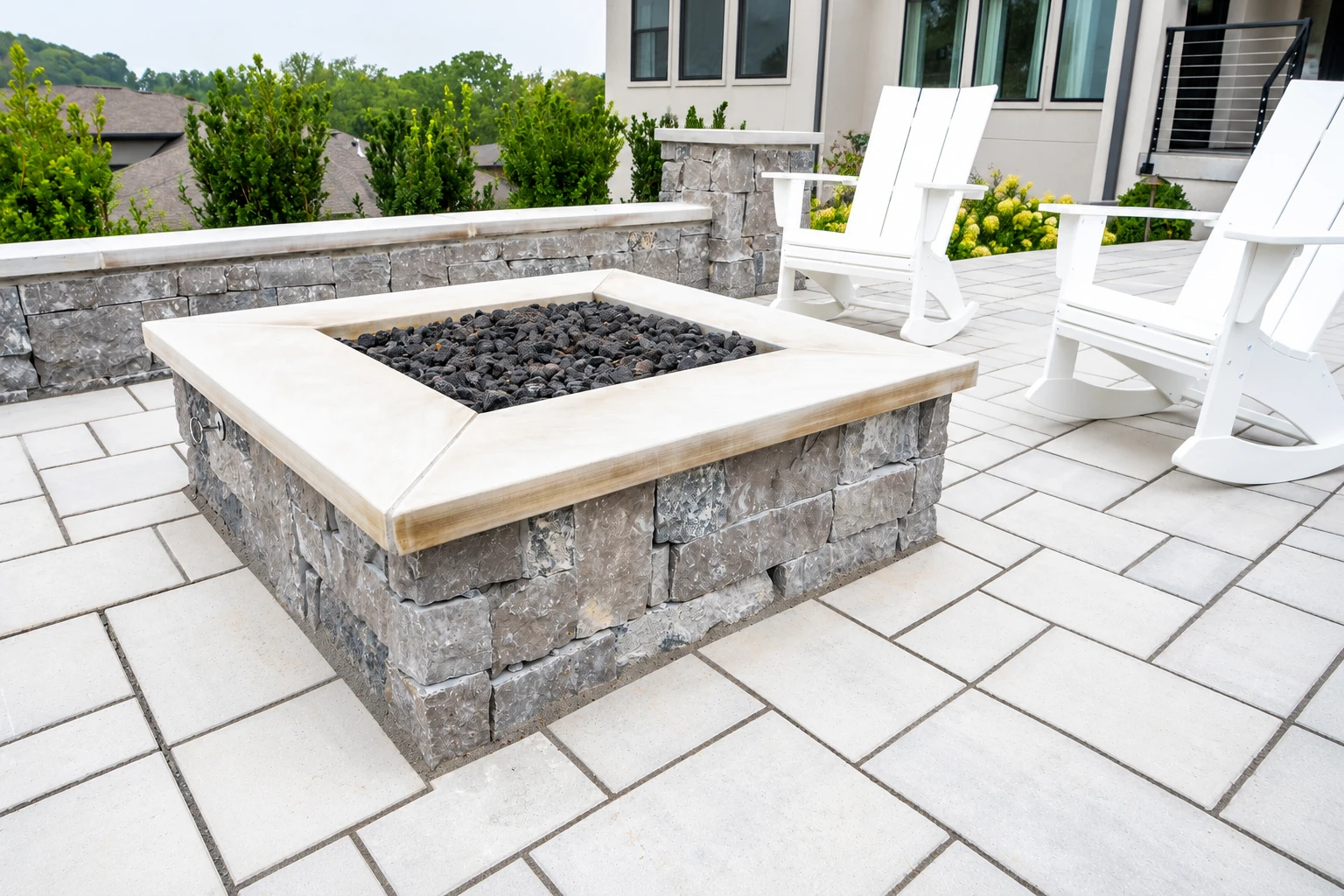
A square stone fire pit with a pale concrete cap sits on a light tiled patio with white chairs.

What does it take to build a concrete patio that lasts in Boston?

Concrete patio construction in Boston means digging out the yard, building a packed base and pouring a slab over it, and with a proper base underneath, concrete holds up where the ground freezes every winter.

Most people call us because the old patio has cracked, sunk at one corner or holds a puddle by the back door, or because there's a patch of yard they'd finally like to use. The price mostly moves with the size of the patio, how much digging and base the ground needs, whether an old slab has to come out first, how easy it is to get material into the yard and which finish you pick. The schedule turns on the weather around the pour, on any permit the city needs and on curing, the wait while new concrete gains strength before you use it. Your own number comes from the estimate, once I've walked the yard.

How we build a concrete patio, from the ground up

When people compare patio bids, I tell them to look at what goes under the slab before they look at the price, because that groundwork is where we put our effort. We start by checking where water runs off the roof and yard and setting the slab to fall away from the house, so you don't end up with a puddle against the foundation. Then we dig out the soft topsoil down to the subgrade, the firm ground the patio sits on, and bring in base material that we spread and pack in layers so it doesn't settle with the dirt. We set the forms, add rebar where the job calls for it so the steel holds the slab together if it cracks, and plan the pour for the cooler part of the day, because concrete that dries too fast in midday heat can leave a weak, dusty top. Once it's placed, we finish the surface, cut control joints, shallow grooves that give the slab a straight place to crack, before it hardens too far, and let it cure. A nice finish is what you see first, and the base is what people want to cut from the budget because nobody sees it on day one. I'd rather spend your money underneath, since that's what decides how the patio holds up.

A patio often connects to other work. If you'd like the surface to look like brick or stone, our stamped concrete services press a pattern and color into the same slab. If you're tired of crossing wet grass to reach it, our concrete sidewalk building work can tie the patio to the driveway, the gate or the back steps.

Broom-finish slab

This suits most families, because a broom finish leaves light ridges across the surface that give your feet grip when the patio is wet or frosty. It's the plainest look and usually the easiest on the budget, so more of the money stays in the base.

Stamped or colored surface

This suits a patio that's the centerpiece of the yard, since the pattern and color can pick up the brick or stone around the house. It costs more and takes more care to keep looking right, and the base underneath gets the same work either way.

Why Boston homeowners call Heartland Boston Concrete Company for patios

I give the estimate, our crew pours

I come out to see the yard and give the estimate myself, so the person pricing your patio is the one who answers for it. Our own crew does the work with me running it, which means the base we talked about on your lawn is the base that goes in.

In business since 2017, groundwork first

We've been in business since 2017, nine years now, and I learned the trade beside older finishers who cared more about the prep than the finish. That's still how we work, and I'd rather explain a step twice than leave you wondering what you're paying for.

Licensed and insured for your patio

We're licensed and insured. The state consumer affairs office lists ground-level patio installers among those who don't need Home Improvement Contractor registration, so it's worth asking each bidder what they carry. When you're ready, call (857) 770-0722 or fill out the form to set up a visit.

Get a free on-site estimate for your Boston patio

We reply within one business day, and the estimate is free with no obligation to book. I'll come out, look at where the water goes and what we'd put under the slab, and give you a price you can understand. It helps to have the patio's rough size, a few yard photos and whether your house sits near a park or in a historic district.

Location
Boston, MA 02118
Hours
Mon–Fri: 6 AM–11 PM, Sat–Sun: 7 AM–11 PM

What to know about concrete patio construction in Boston

Boston's Inspectional Services issues Short-Form permits for minor alterations, repairs and replacements that leave the structure or use of a home, building or lot unchanged, but the city's pages don't name patios, so whether yours needs a permit is a question for that office about your project. Before work starts, we check with the city about the permits your job may need and help you get the paperwork in order, because if work starts before a permit is issued, the city may charge double the permit cost or issue a building code violation. Depending on the project, a permit may also need zoning approval, a Parks and Recreation review if the work is within 100 feet of a park or parkway, or a Landmarks Commission review in a historic district.

We're based in Boston and work across the cities around it, including Cambridge and Somerville. A lot of the patios we build here go into small backyards behind triple-deckers and row houses, where material comes in by wheelbarrow down a side path and the slab has to shed water away from a foundation only a few feet off. When you're deciding how big to go, keep in mind that the Boston Water and Sewer Commission bases its stormwater charge on how much hard surface your property has, so you can ask the commission how a new patio counts toward it.

Questions Boston homeowners ask about concrete patios

How much does a concrete patio cost in Boston?

There's no fair number until we've seen the yard, because the price comes from the size, the groundwork and the finish on your job. If you're trimming the budget, trim the finish or the size before the base, since a cheap base is the part you end up paying for later.

Do I need a permit to build a concrete patio in Boston?

The city's permit pages don't settle it for patios, so the answer for your project comes from Inspectional Services, and we check with the city before work starts. Long-Form permits are for major alterations or renovations that change a building's structure or use, and if you're unsure which permit fits, Inspectional Services can tell you.

What causes a new concrete patio to crack in its first winter?

Usually it's what's under it, because a slab poured on undisturbed topsoil will crack in its first winter. The base matters more than the concrete itself, so ask each bidder how deep they'll dig and what base they'll pack in before you weigh their prices.

What kind of concrete should a patio in Boston be made with?

The National Ready Mixed Concrete Association recommends good-quality air-entrained concrete, which holds tiny air bubbles that give freezing water room to expand, for concrete exposed to severe freezing and thawing. Check whether each bid names air-entrained concrete for the slab, because if it doesn't say, you don't know what you're getting.

When is the best time to pour a concrete patio in Boston?

Pick a stretch when freezing weather is unlikely soon after the pour. The concrete association urges caution about pouring outdoor concrete in late fall, winter or early spring if it could freeze while it's still soaked, so we talk through the forecast with you before setting a date.

Will my new concrete patio crack like the old one did?

It can, because poured concrete handles ground movement by cracking, but control joints give it a planned place to crack in a straight line. Joints don't stop heaving, and a section that lifts at a joint edge becomes a trip hazard that has to be replaced. Patching isn't a clean fix either, since new concrete differs in color from old and the patch stays visible for the life of the patio.

How do I take care of a new concrete patio in its first winter?

Skip deicing chemicals that first winter, which is the concrete association's advice, then use them in moderate amounts after that, so plan another way to handle ice for the first season. If you want a sealer, put it on when the concrete is reasonably dry, and late summer after a few dry days is an ideal time.

Call (857) 770-0722