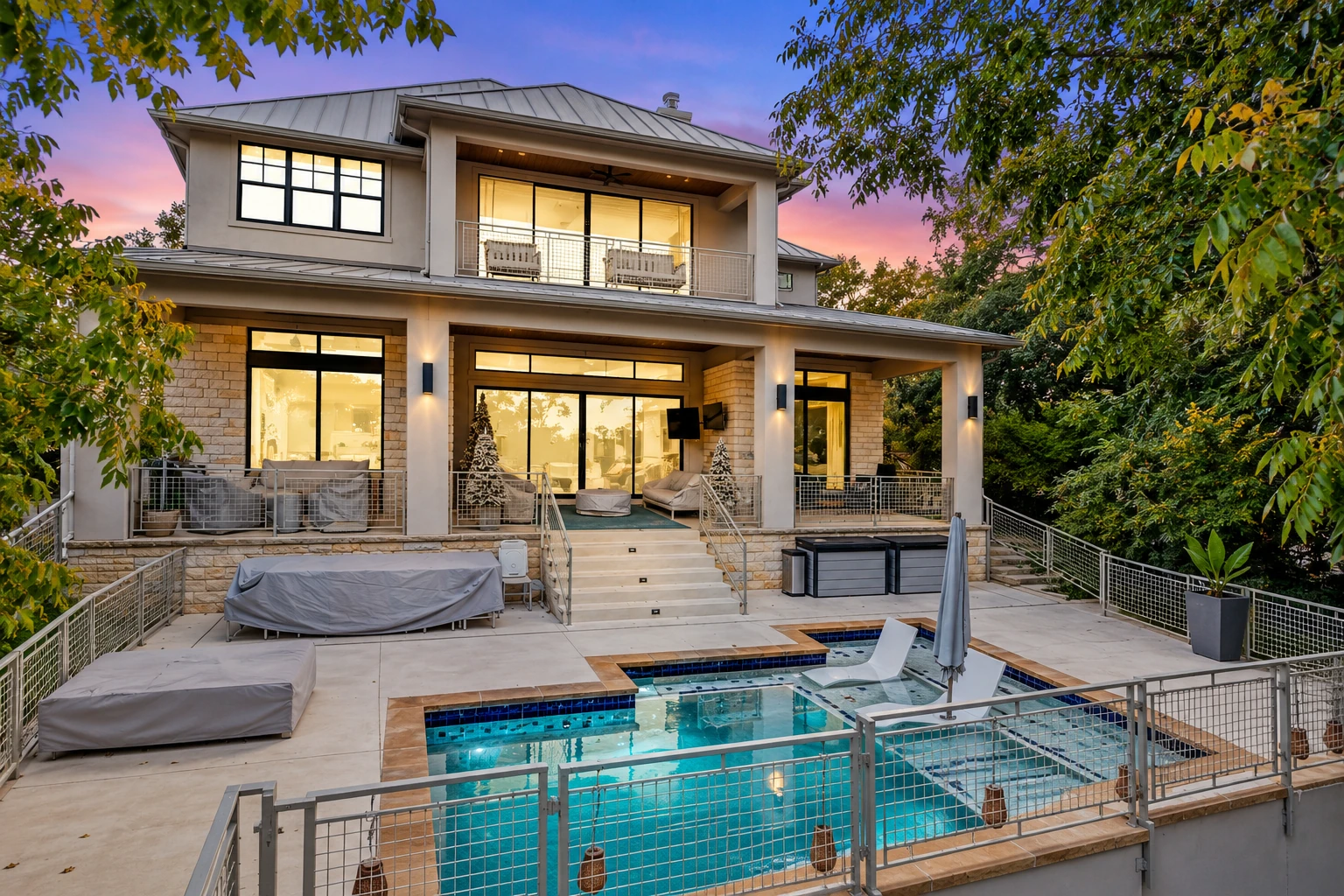
Bare wet feet come first, so grip is the first thing we talk about when you pick a finish. Then we check where the water runs across your yard and set the deck to fall away from the house and the pool. Our crew digs out the soft dirt and packs the subgrade, which is what the slab sits on, because a base that's only raked level settles with the dirt and takes the deck down with it. You can't see the base on day one, so it's the first thing people want to cut, and it's the last thing I'd cut, because it decides how the deck holds up. A plainer finish is the better place to save. We set the forms, lay rebar so the steel holds the slab together if it cracks, and pour early in the day so midday heat doesn't leave a weak, dusty top. Once it's finished we cut control joints, shallow grooves that give the concrete a straight line to crack along instead of a random one, and keep it damp while it cures, the slow hardening that gives concrete its strength. Before we leave, I show you the joints you'll want to check and reseal now and then.
A pool deck rarely stands alone. If the deck meets a back door or drops down to the lawn, we can build concrete steps to match, so nobody's stepping onto a block that's shifted. If you want a pool shed or cabana on its own slab, our slab foundation building covers that, and planning it with the deck means the water off both has one place to go.
Replacing a cracked or sunken deck
This suits a deck that's settled, heaved or started sending water back toward the house. We break out the old slab and dig into what's under it, because the reason it failed is usually down there, and new concrete on the same base just repeats the problem.
A new deck for a new pool
This suits you if the pool is going in now or just went in. We work out the deck's size, slope and drainage with the pool and the yard together, so the water has somewhere to go from the first rain.
Adding on to the deck you have
This suits a deck that's sound but too small for chairs or a table. We check the old slab first, because tying new concrete to a slab that's already moving means the new part moves too, and I'll tell you plainly if replacing makes more sense.