
Yard and garden walls
This suits a wall that holds back a garden bed or levels part of a backyard with nothing heavy above it. It still gets a footing, steel and drainage, just sized for the lighter load the design shows.
A leaning wall or a slope washing out? We pour a wall designed and drained for your site, so it holds the yard back.
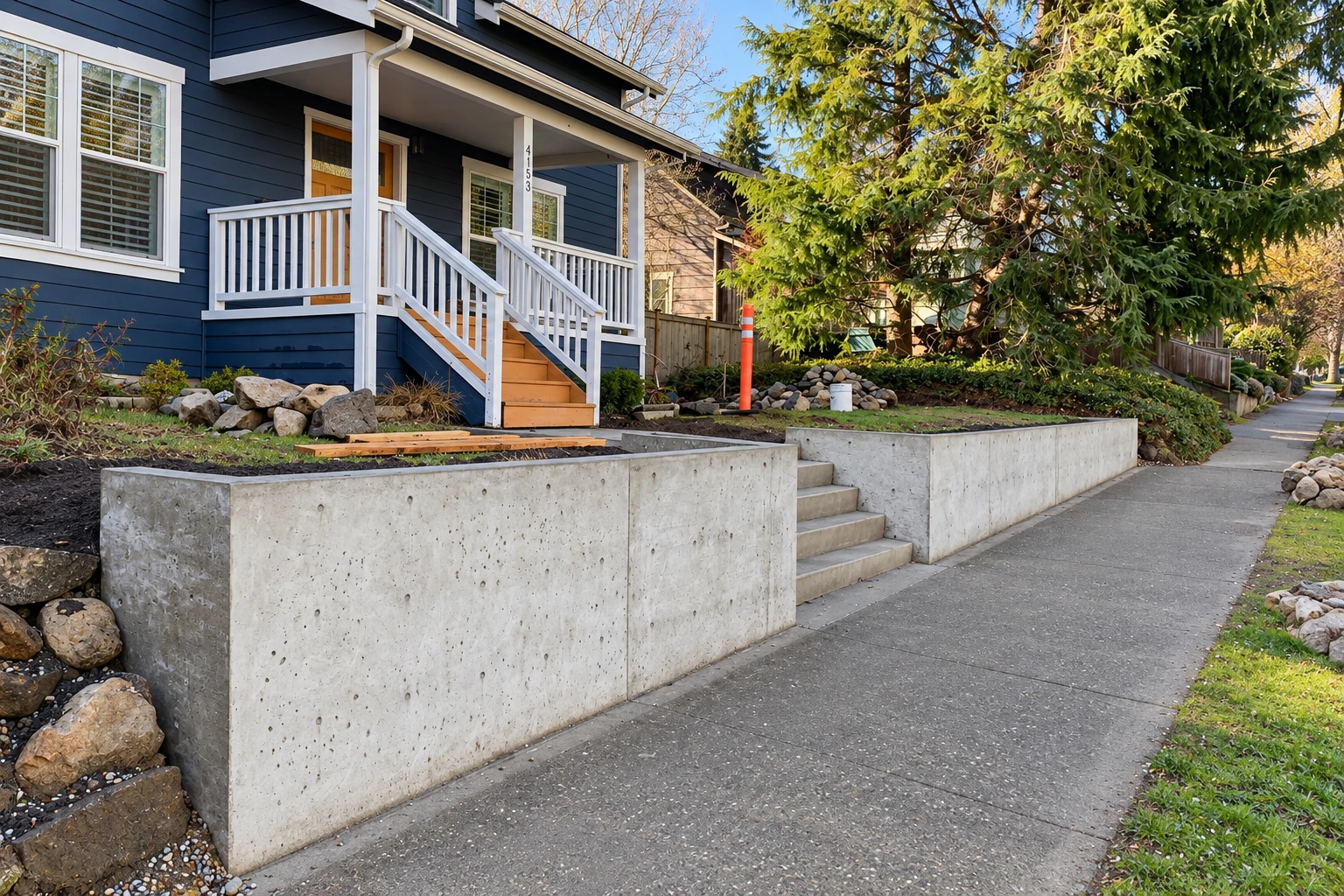
A concrete retaining wall in Boston is built right on your property, with concrete placed and packed into forms made for your site, and once it cures it holds back the earth by resisting the sideways push of everything behind it.
Most calls start with a wall that's leaning, cracking or bulging, or a slope that keeps sliding into the yard or the driveway. The price turns on how long and tall the wall is, how much digging it takes, what the design calls for in footing and steel, how the water gets carried away, and whether a driveway or a building sits above it. The schedule mostly turns on the weather and on curing, the wait while the concrete gains strength before we backfill and anyone works near it. When I come out, I'll walk the slope with you and give you your own number for your wall.
When you call, I'm the one who comes out to look at the slope, the water and what sits above the wall, and I give you the estimate myself. Then our own crew builds it with me running the job, so the person who quoted it is on site.
We've been in business since 2017. I learned the trade beside older finishers who cared more about what goes under the concrete than how the top looks, and that's still how we work. On a wall, that means the footing and the drainage get our attention first.
We're licensed and insured. I'd rather explain the design and the price twice than leave you guessing about what you're paying for. When you're ready to talk about your wall, call (857) 770-0722 or send us the form on this page.
Send the form or call, and we'll reply within one business day to set a time for me to come out, look at the slope and give you the estimate in person, with no obligation to book. It helps if you have photos of the slope, the rough length and height of the wall, and anything close by, like a driveway or a building.
In Boston, more than one office can have a say in a wall project. The Boston Conservation Commission reviews projects that fall within a flood plain, because work there can affect the health of nearby wetlands, so a wall on a property in a flood plain goes through that review. The city's Inspectional Services Department enforces Boston's building, housing, health and environmental rules, and Massachusetts requires a licensed construction supervisor to oversee certain construction projects, which you can check with the state's construction supervisor licensing office. Before work starts, we check with the city about the permits your wall may need and help you get the paperwork in order.
Around Boston we mostly see older houses on tight lots, yards that step down from the street, and walls that sit right against a driveway or a neighbor's line, where there's little room to dig or get a truck in. We do the same work in the cities around Boston, including Brookline and Newton.
Poured concrete retaining wall construction in Boston usually costs about $48 to $51 per square foot, which is the going rate in the area and not our price. Your own figure depends on your wall's size and design, and it comes from the estimate when I see the site.
Poured concrete typically cures on site for 7 to 28 days before it reaches full strength. That wait can hold up the next phase of a project, so plan any work near the wall for after it's cured, and we'll tell you where your wall stands before anyone starts.
Water trapped behind it is the usual cause, because water pressure can greatly increase the load on the wall. Even a moderate rise in groundwater behind a wall can sharply raise the sideways push and the risk of it tipping or sliding, so ask any builder how their design handles groundwater.
Keep the drain outlets clear and flowing, because water that backs up behind the wall can cause leaks and freeze damage. Weep holes, the small openings near the bottom of the wall, only give backup relief and can clog or freeze, so they work alongside the main drainage, not in place of it.
Ask how they plan around the weather and who's on the crew, because temperature, humidity, wind and crew skill all affect how strong the concrete gets and how the finish turns out. A City of Boston checklist lists a builder's construction license and workers' compensation affidavit, so you can ask to see both.